Overview of the Report
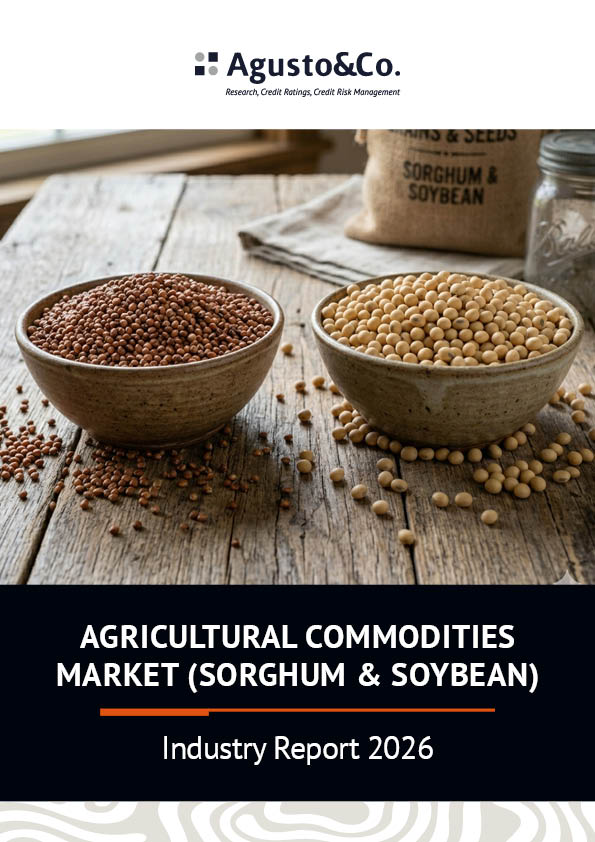
The Nigerian sorghum and soybean subsegments remain strategic components of the country’s agricultural sector, supporting food security, industrial manufacturing, livestock production and import substitution. In 2025 both commodities benefited from rising domestic demand driven by population growth, increased industrial utilisation and policies promoting local sourcing.
Nigeria retained its position as the world’s second-largest sorghum producer, with output of approximately 6.6 million tonnes in the year ended 31 December 2025. Domestic sorghum consumption rose to around 7.2 million tonnes, reflecting stronger demand from breweries, flour millers and animal-feed manufacturers. Sorghum has transitioned from a largely subsistence crop to an important industrial raw material, providing a cost-competitive substitute for imported barley and wheat amid exchange-rate pressures and elevated import costs. Nigeria also remained the leading soybean producer in sub‑Saharan Africa, with 2025 production estimated at about 1.42 million tonnes. Soybean’s protein and oil profile underpins its growing role in feed milling, edible-oil refining, food processing and industrial applications. Rising demand continues to outpace domestic supply, signalling significant opportunities for expansion across the value chain.
The sectors confront persistent structural constraints: climate-related shocks, insecurity in major producing regions, insufficient storage and processing infrastructure, limited access to affordable finance and logistics bottlenecks. These factors contribute to supply shortfalls, price volatility and productivity levels below international benchmarks. Nevertheless, recent investments in processing capacity, structured outgrower schemes, improved seed varieties, commodity-exchange infrastructure and value‑chain integration are enhancing resilience and efficiency.
Looking ahead, we believe that accelerating industrial demand, favourable demographics and policy support for local content should sustain investment and production growth. Realising this potential will require accelerated productivity gains, targeted infrastructure and mechanisation investments, improved financing mechanisms and concerted measures to mitigate security and climate risks.
Overall, this report includes;
- An overview of the Global Sorghum and Soybean Industry
- Structure of the Nigerian Sorghum and Soybean Industry
- Production and Market Size Analysis
- Value Chain and Market Economics Assessment
- Key Industry Participants and Competitive Landscape
- Recent Trends and Developments in the Industry
- Regulatory and Policy Environment
- SWOT Analysis of the Industry